Skip to content
‹ All work

Touch Dash

Your dashboard. Redesigned with a fingertip.

An in-car dashboard app, deployed by a UAE client, that drivers can redesign on the touchscreen. It also opens thousands of existing third-party dashboard gauges with a near pixel-perfect match.

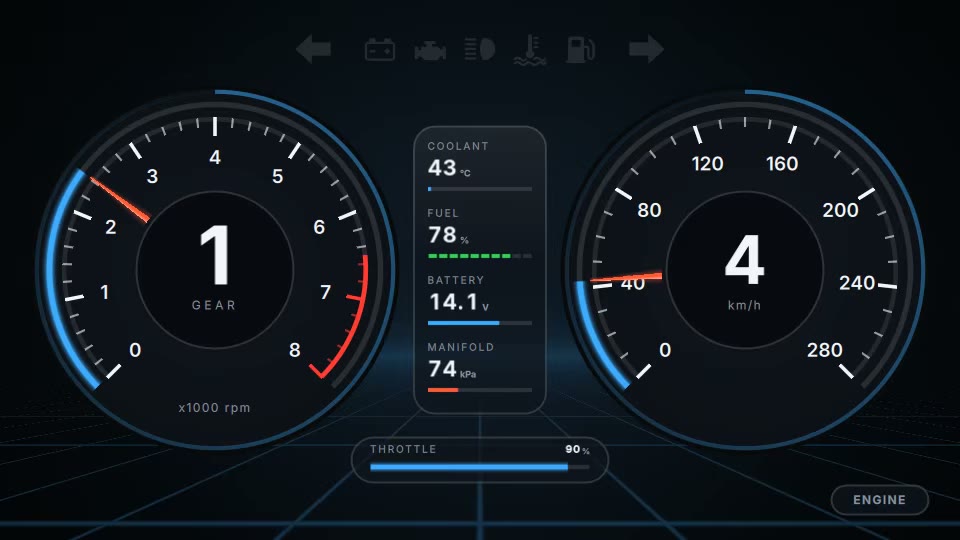
Simulated drive on the default theme.

At a glance

gauges imported from 18 real dashboard themes
7,627 / 7,646
gauges imported from 18 real dashboard themes
visual match against the original renders
SSIM 0.93–1.00
visual match against the original renders
memory on large themes; open time 1.73 → 0.54 s
868 → 345 MB
memory on large themes; open time 1.73 → 0.54 s

Edit mode

Every gauge, editable by touch.

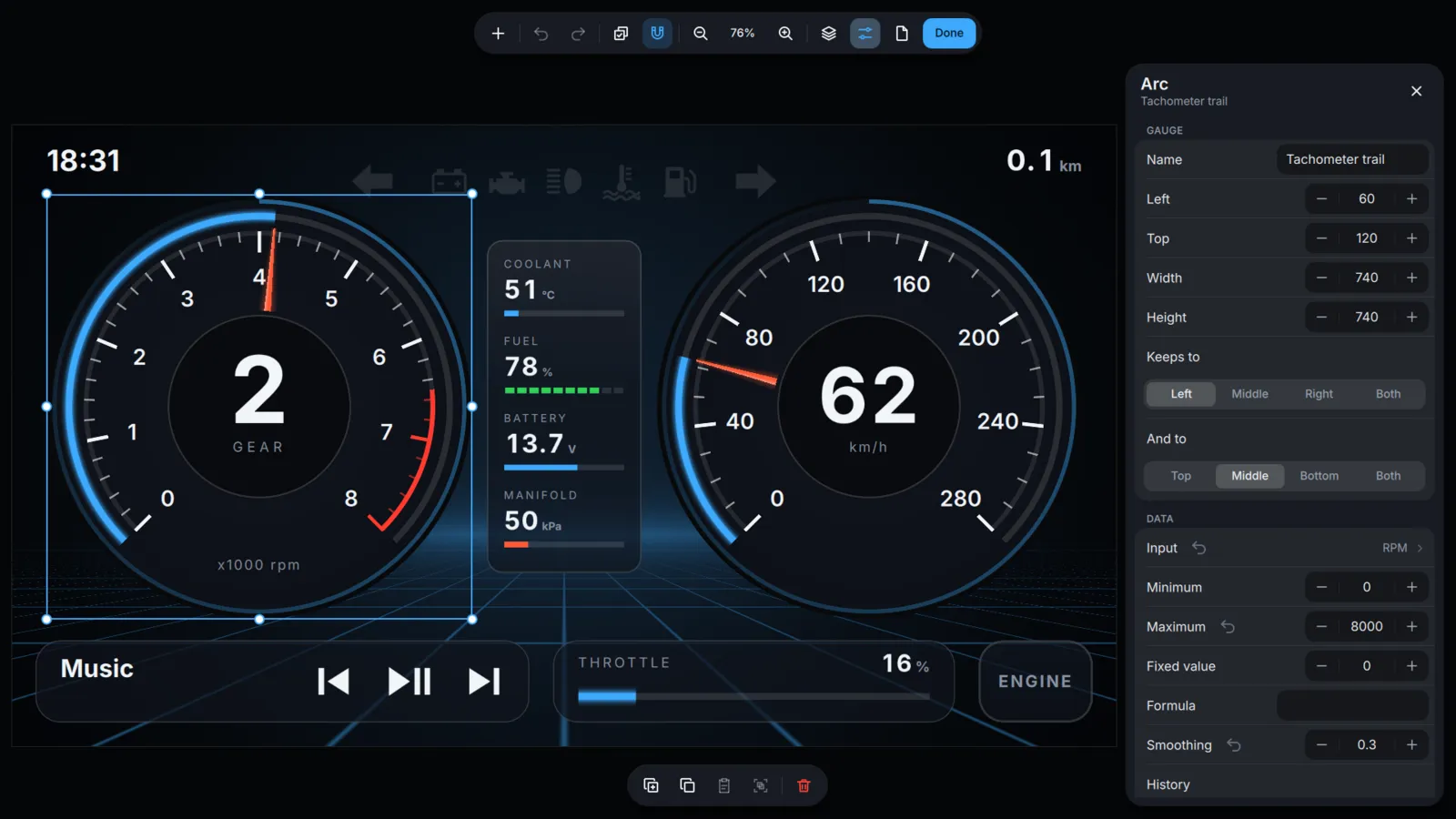
Move, resize and rebind any gauge on the car’s own screen. No laptop, no export step.

On-screen editor with a selected tachometer and its properties

Compatibility

Brings its past with it.

Drivers keep the dashboards they already own. The importer opens third-party themes and matches the original renders almost pixel for pixel.

7,627

of 7,646 gauges imported from 18 real themes

3D

A car inside the dash.

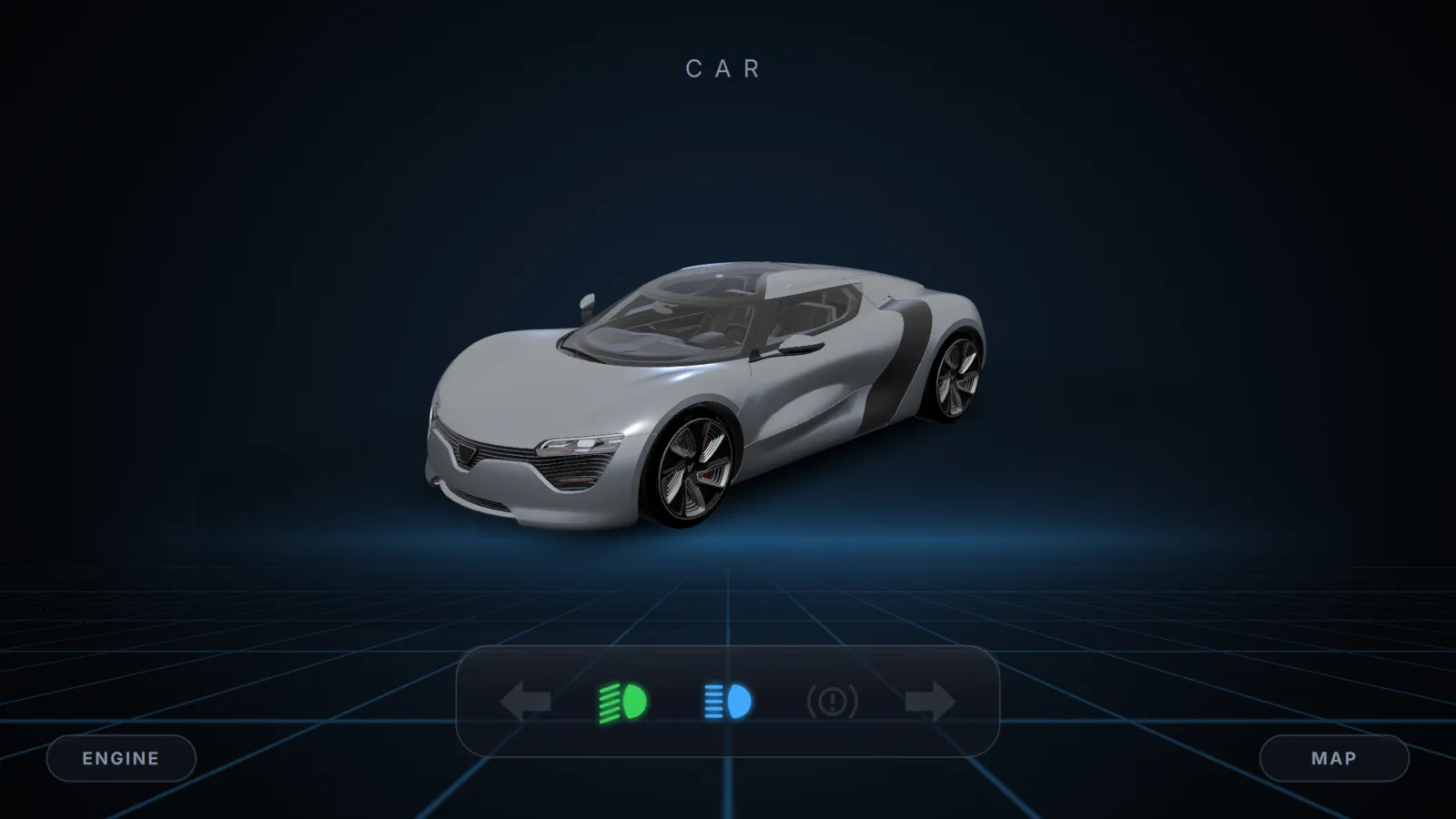
A Qt Quick 3D view shows the car with live lamp status, right next to the gauges.

3D car model with headlight status icons

Shipped

Deployed in the UAE.

One codebase runs on Android, Linux, Windows and a dedicated RK3568 in-car unit with signed USB updates.

4

platforms from one Qt 6 codebase

Measured

Faster. Lighter.

Memory on large themes

lower is better
Before
868 MB
After
345 MB

Time to open a large theme

lower is better
Before
1.73 s
After
0.54 s

Tech specs

Role
Sole engineer: architecture, rendering, vehicle links, packaging
Context
Client project for an automotive company in the UAE, deployed by the client
Year
2026
Disciplines
Software, Firmware
Stack
  • Qt 6.10
  • QML
  • Qt Quick 3D
  • C++20
  • MapLibre
  • SocketCAN / SLCAN
  • ELM327 OBD-II
  • Bluetooth
  • RK3568 Linux appliance
Origin
Client work
The full engineering story

The problem

Drivers already own dashboards designed for an existing commercial app. The client wanted a modern, touch-first app that could open those dashboards as-is, let drivers redesign them on the car’s screen, and run on phones, PCs and a dedicated in-car unit.

What I built

  • A Qt 6/QML app with a layered architecture (enforced by tooling), 71 Qt Test suites and ~68k lines of code.
  • An importer for third-party dashboard files: 7,627 of 7,646 gauges across 18 real themes load, scored against the original renders with SSIM 0.93–1.00.
  • Vehicle links: SocketCAN, SLCAN, ELM327/OBD-II, Bluetooth, UDP/TCP and a common CAN dashboard protocol.
  • Extras drivers asked for: lap timer, dyno, voice alerts, maps (MapLibre), a 3D car view, Arabic with right-to-left layout.
  • An embedded build for an RK3568 appliance: kiosk mode with signed USB updates.

Performance work

Large themes opened slowly and used a lot of memory. Caching decoded assets and loading gauges lazily took memory from 868 MB to 345 MB and open time from 1.73 s to 0.54 s. Gauge logic runs in about 0.4 ms (95th percentile) for 250 gauges, against a 2 ms budget.

Result

All planned milestones (M0–M12) shipped in v0.2.1, and the client has deployed it. One codebase runs on Android, Linux, Windows and the dedicated RK3568 in-car unit.
Next

Aquagate → SQMeter

Water and power, prepaid. Proven in Rwanda.

See the projectBlack 3D-printed Aquagate enclosure with an LTE antenna, a mains terminal block and labelled valve terminals

Let's talk

Have a product to build?

Tell me what you are making. I reply within one working day, usually with first questions and a rough plan.

Or send a message
Esc