Skip to content
‹ All work

Filling Line

Seven stations. One codebase.

One shared firmware codebase driving every station of an industrial keg-filling line over CAN. It recovers from faults on its own, positions servos to ±0.5 mm, and grew into a platform for more than 100 devices.

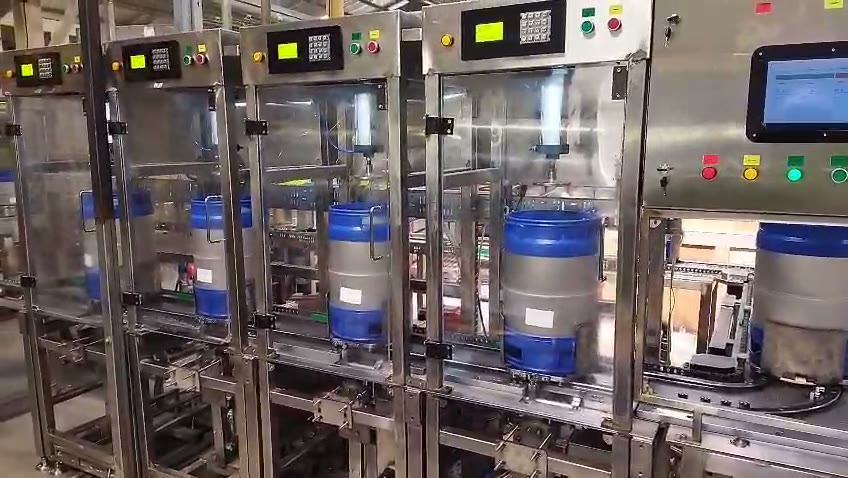
The line in production.

At a glance

one verified codebase, each station set up at compile time from its node ID
7 stations
one verified codebase, each station set up at compile time from its node ID
on the firmware platform it grew into
100+ devices
on the firmware platform it grew into
servo positioning on the line’s Delta drives
±0.5 mm
servo positioning on the line’s Delta drives

On site

Firmware you can stand next to.

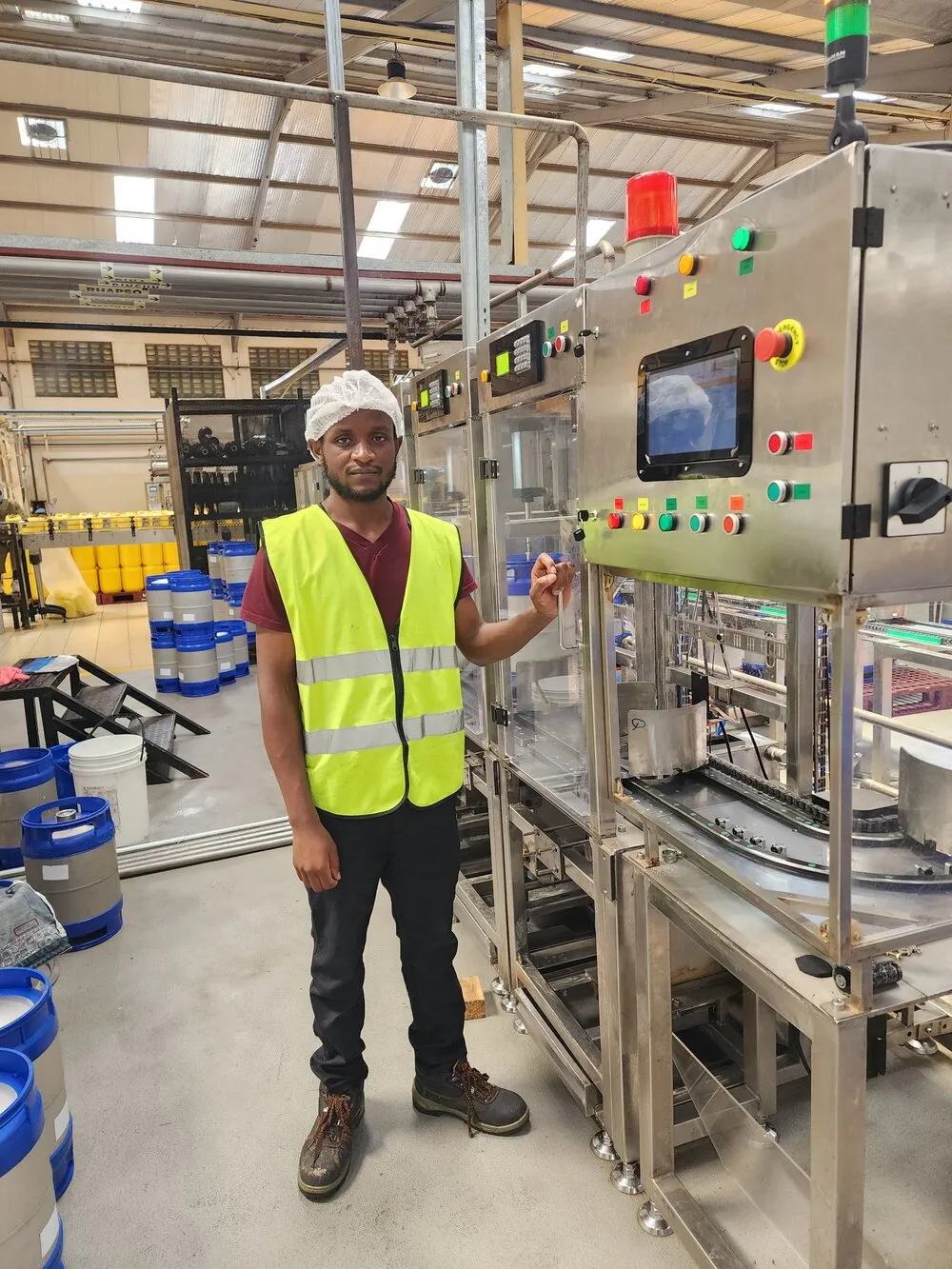
Every station of an industrial keg-filling line runs the same verified control core, configured at compile time from its node ID.

Erick beside a station control panel on the filling line

Motion

Precise to half a millimetre.

A servo-control driver for the line’s Delta drives holds position tightly enough for repeatable filling.

±0.5 mm

servo positioning

Platform

One codebase. A hundred devices.

The approach grew into a firmware platform for 100+ devices and several board variants, updated in the field through an OTA bootloader.

100+

devices on one platform

Tech specs

Role
Firmware engineer: control architecture, CAN protocol, servo driver, certification
Context
Novek Limited, industrial automation (Firmware Engineer)
Year
2023–2025
Disciplines
Firmware, Electronics
Stack
  • STM32
  • C / C++
  • CAN 2.0B
  • CANopen
  • Delta servo drives
  • Modbus
  • Bootloader + OTA
  • Hardware-in-the-loop testing
Origin
Employer project
The full engineering story

The problem

Each of the line’s seven stations had its own firmware. Every change had to be repeated, and re-tested, seven times. Drift between the copies caused bugs, and a single node dropping off the bus could stop the whole line.

What I built

  • One codebase for the whole line. Each station’s behaviour is chosen at compile time from its node ID, around a single verified control core. Fixes land everywhere at once.
  • A distributed CAN control system with a fragmentation protocol for messages larger than one frame, and automatic fault recovery. The line keeps running when a node drops out.
  • A servo-control driver for the line’s Delta drives that holds position to ±0.5 mm.
  • A CAN bridge that lets operators run each station automatically or by hand.

Where it went next

The same approach grew into a firmware platform that runs one codebase across more than 100 devices and several product and board variants, instead of a separate build per product. It’s updated in the field through an OTA bootloader, with a PCB integration-test framework that catches mismatches between board and firmware before deployment.

Certification

I also took a liquid-dispenser product through CE certification with SGS China. That meant firmware validation, EMC and reliability testing, and the compliance documentation.
Next

Industrial CAD

Machines your workshop can build.

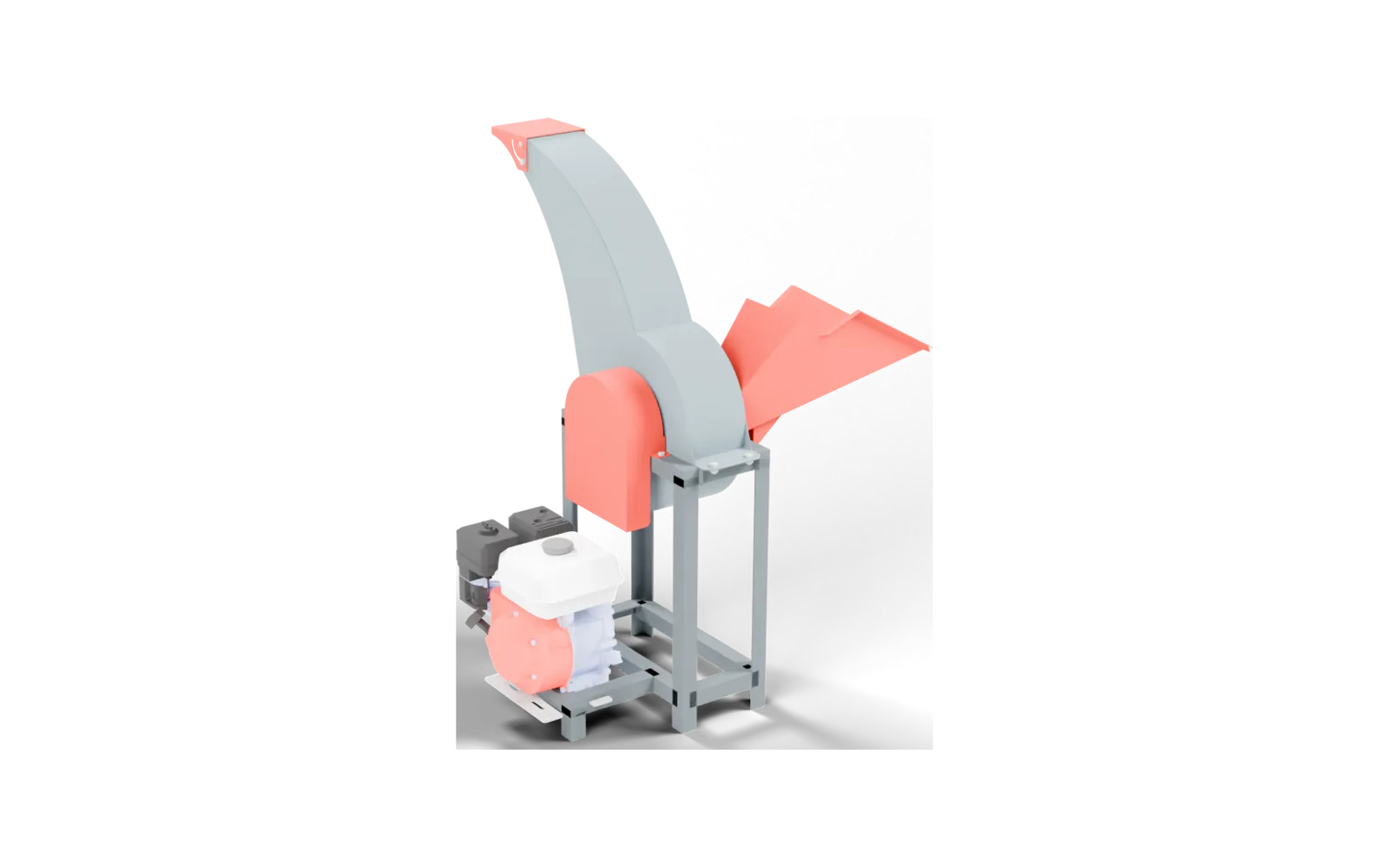
See the projectEngine-driven chaff cutter on a steel frame with a feed hopper, beside a human figure for scale

Let's talk

Have a product to build?

Tell me what you are making. I reply within one working day, usually with first questions and a rough plan.

Or send a message
Esc